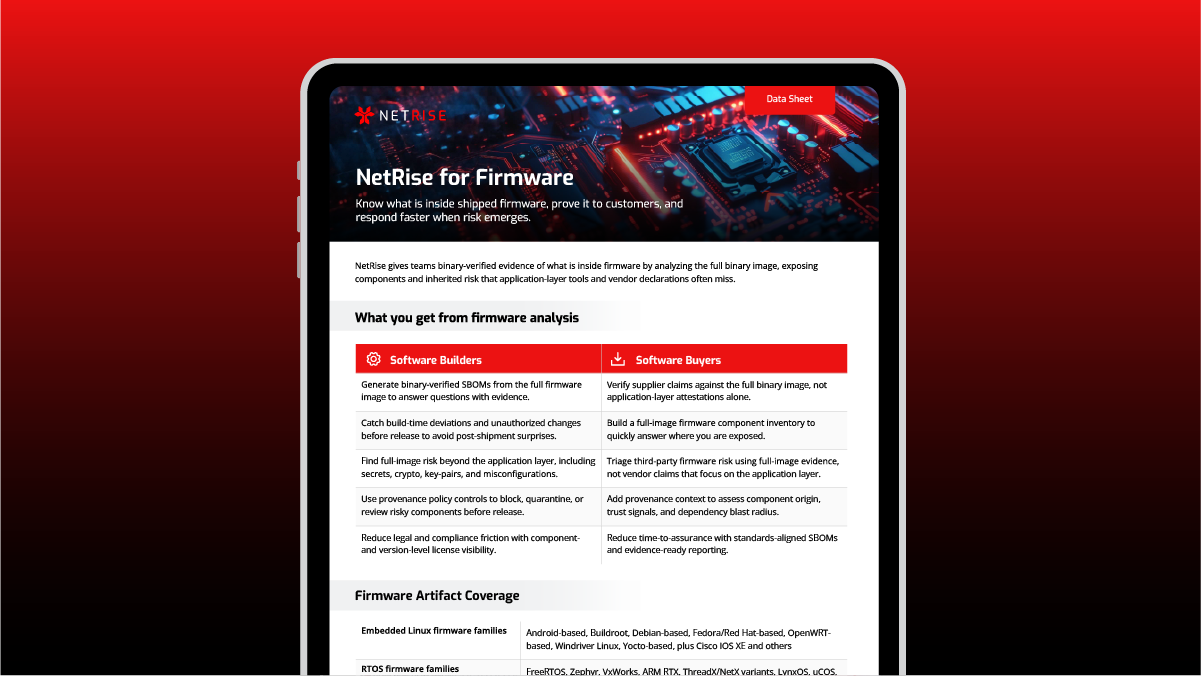

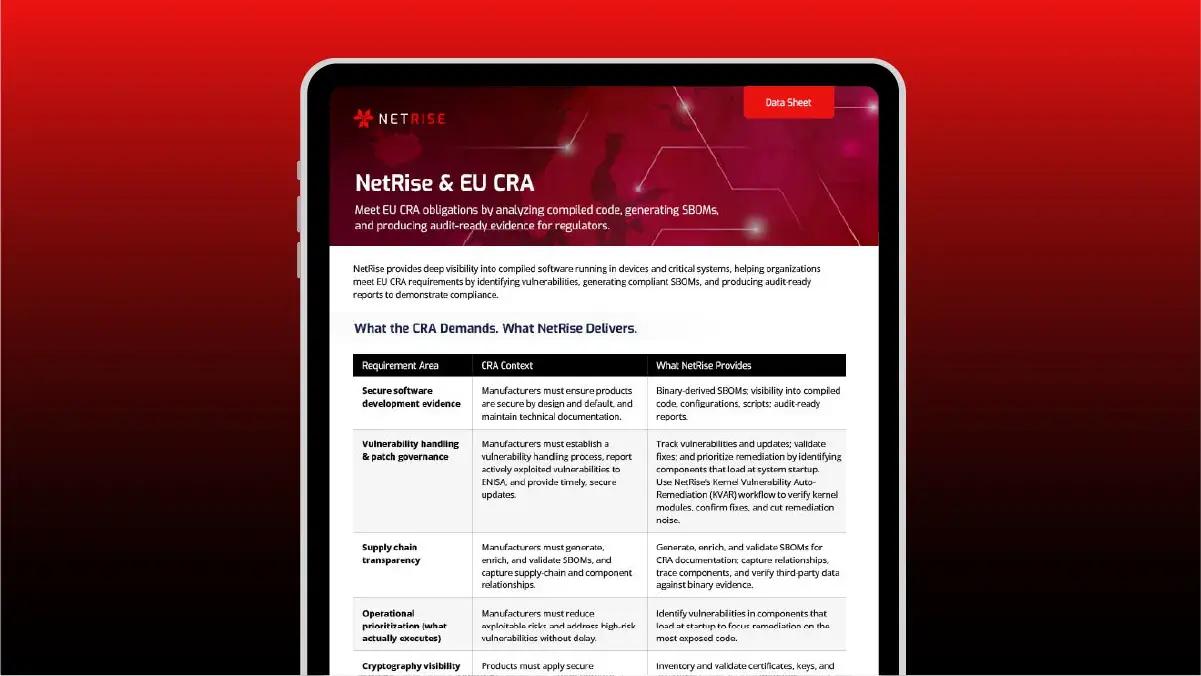
EU Cyber Resilience Act (CRA): An Overview eBook
A concise overview of Regulation (EU) 2024/2847, including applicability, phased enforcement, and the cybersecurity requirements manufacturers must meet for products with digital elements.
Why This Document Matters:
The Cyber Resilience Act fundamentally changes how software and device security is assessed in the EU. Compliance can no longer rely on policies, questionnaires, or source-code declarations alone.
Manufacturers must now demonstrate that:
-
Products ship without known exploitable vulnerabilities
-
Secure-by-default configurations are enforced
-
Vulnerabilities are continuously identified, prioritized, and remediated
-
SBOMs accurately reflect what is actually deployed
-
Security updates, disclosure, and reporting obligations are met within strict timelines
This document breaks down what those requirements mean in practice — and what evidence regulators will expect.
What You’ll Learn in This Overview:
-
When the CRA enters into force and which requirements apply in each phase
-
Which products with digital elements fall in scope — and which are excluded
-
The essential cybersecurity requirements defined in Annex I
-
New obligations for vulnerability handling, disclosure, and reporting
-
How CRA enforcement differs from prior EU directives
-
What regulators expect beyond traditional compliance checklists
Key CRA Focus Areas Covered:
-
Secure-by-Design & Secure-by-Default Requirements
How products must be designed, configured, and delivered to minimize risk. -
Vulnerability Identification & Handling
Requirements for detecting, prioritizing, remediating, and disclosing vulnerabilities throughout the product lifecycle. -
SBOM Generation & Accuracy
Why vendors must document software components using machine-readable SBOMs — and why accuracy matters. -
Exploitability & Risk Context
Expectations for identifying vulnerabilities that are actively exploited or pose real operational risk. -
Reporting & Disclosure Timelines
ENISA reporting requirements, early warning obligations, and standardized formats such as VEX.
How NetRise Supports CRA Alignment:
The CRA requires visibility into what actually executes in production — not just what vendors claim was included. NetRise enables this by analyzing compiled software and firmware to generate verifiable, audit-ready evidence.
With NetRise, organizations can:
-
Generate and continuously monitor SBOMs for compiled artifacts
-
Identify known exploited vulnerabilities and high-risk weaknesses
-
Detect misconfigurations, embedded secrets, and cryptographic risk
-
Validate secure-by-default configurations and binary hardening
-
Support VEX-based vulnerability disclosure and reporting
-
Maintain continuous post-production monitoring across versions
This document maps CRA requirements to the types of technical evidence regulators will expect — and how teams can produce it without relying on source code access.
Who Should Read This:
-
Product Security & Engineering Leaders
-
Compliance, GRC, and Regulatory Teams
-
Software and Device Manufacturers selling into the EU
-
Third-Party Risk & Vendor Management Teams
-
Security Leaders preparing for CRA audits and enforcement
Are you ready to comply with EU Cyber Resilience Act requirements?
Download the EU Cyber Resilience Act (CRA) Overview to understand what the regulation requires, how enforcement will work, and how evidence-based software visibility helps organizations meet CRA obligations with confidence.