
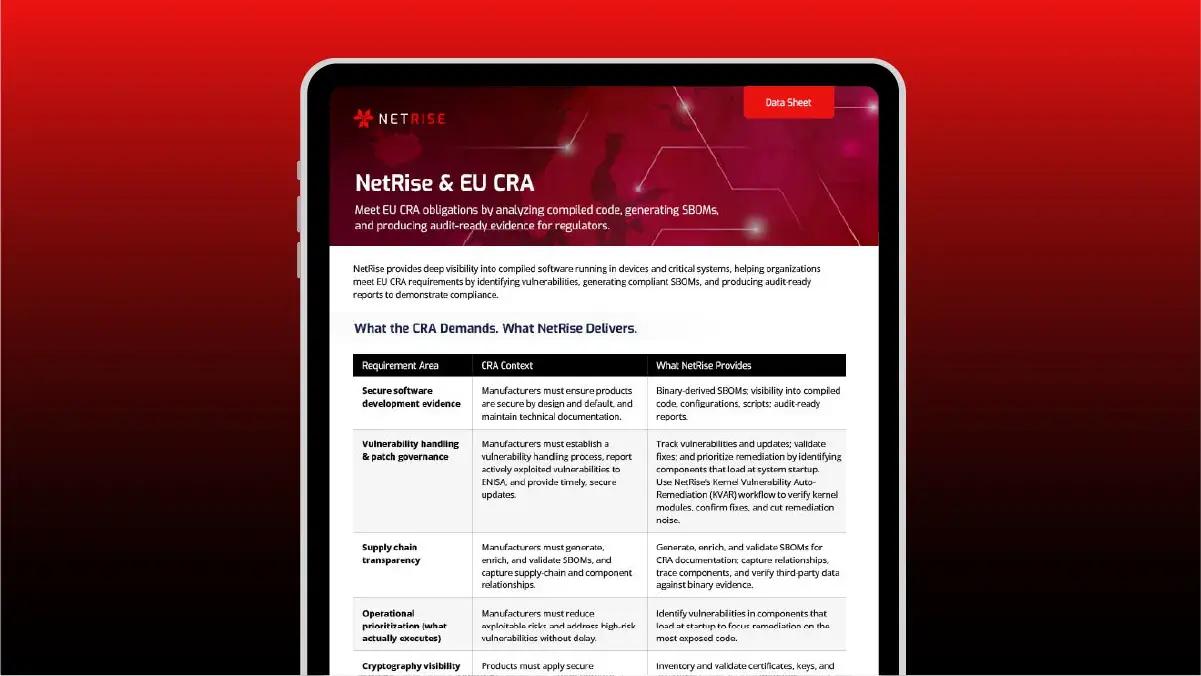



What You'll Learn:

CRA requirements

Expectations

Documentation

Prioritization

Audit-readiness

Operationalizing Cyber Resilience Act Readiness
Key CRA Requirements Covered:
- Secure-by-Design & Secure-by-Default Evidence
- Vulnerability Handling & Patch Governance
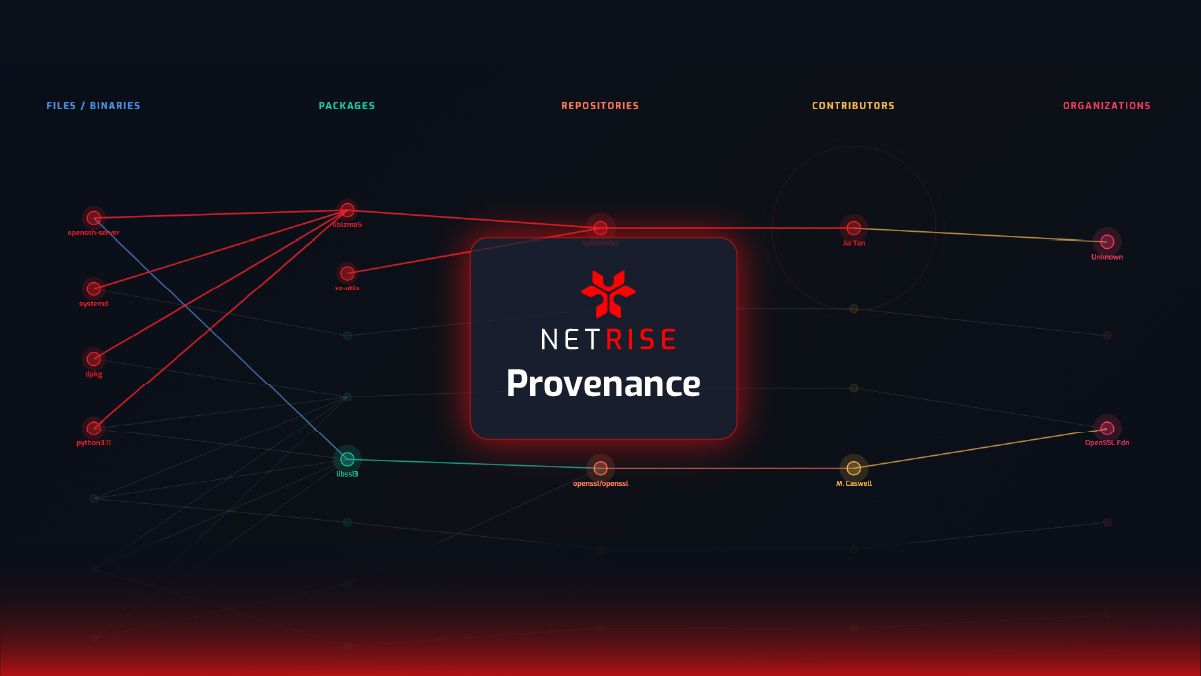
- Supply Chain Transparency & SBOM Validation
- Operational Prioritization (What Actually Executes)
- Cryptography Visibility & Key Management
- Reporting, Disclosure & ENISA Alignment
How NetRise Supports CRA Readiness:
- Generate and validate binary-derived SBOMs (SPDX, CycloneDX)
- Identify vulnerabilities in startup-loaded components
- Validate kernel vulnerabilities and fixes with KVAR workflows
- Detect misconfigurations, embedded secrets, and crypto risk
- Produce CRA-aligned reports for audits, CE marking, and ENISA reporting
- Maintain version history and traceability across releases
How NetRise Supports CRA Readiness

Binary-Derived SBOM Generation & Validation
Startup Component Vulnerability Detection
Kernel Vulnerability Validation (KVAR)
Embedded Risk & Misconfiguration Detection
CRA-Aligned Compliance Reporting
Release Traceability & Version History
Who This Data Sheet Is For:
Who This Data Sheet Is For: carousel
Product Security & Engineering Teams
GRC, Compliance & Regulatory Leaders
Software & Device Manufacturers selling into the EU
Third-Party Risk & Procurement Teams
Security Leaders preparing for CRA enforcement
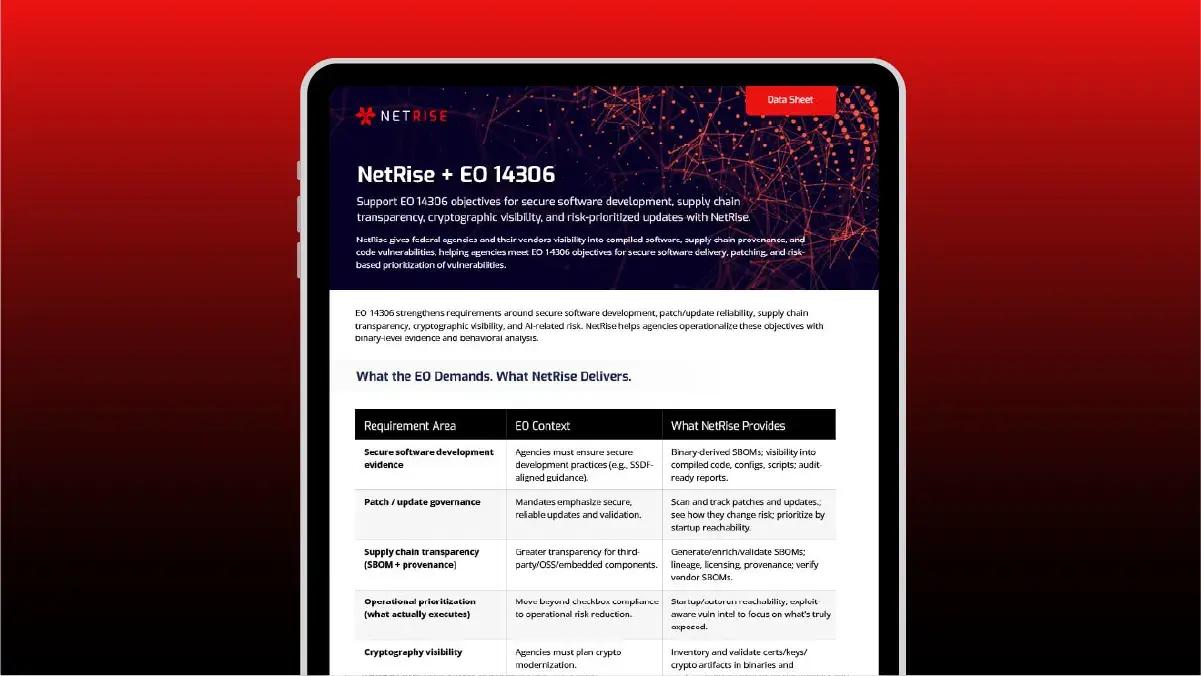
Download the EU Cyber Resilience Act (CRA) Compliance Data Sheet
Get a practical breakdown of what the EU CRA requires — and how organizations can meet those obligations with defensible, audit-ready evidence. Learn how binary-derived SBOMs, execution-aware vulnerability analysis, and continuous software visibility help manufacturers and buyers demonstrate compliance, reduce regulatory risk, and prepare for CRA enforcement with confidence.