


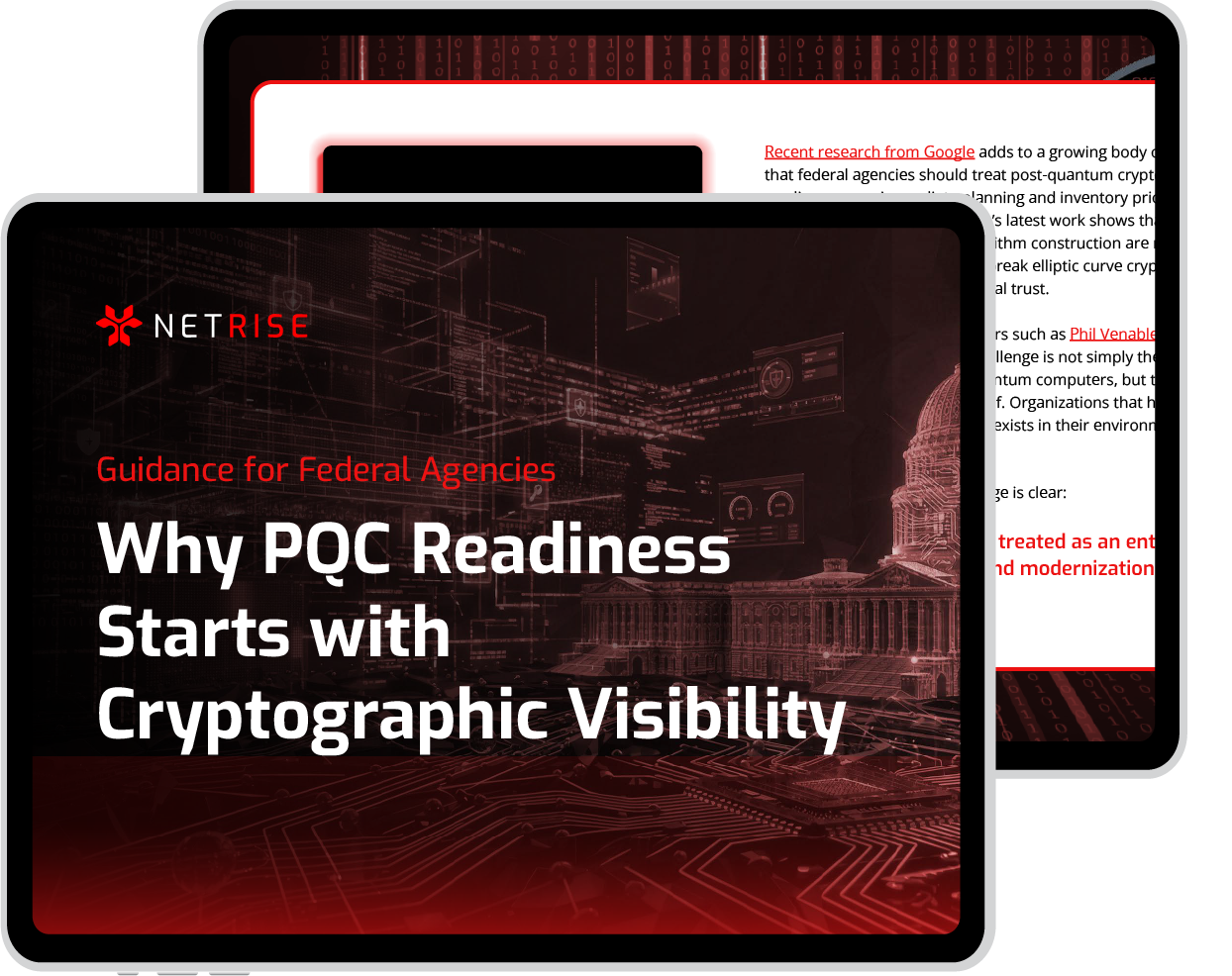
Why This Report Matters

The timeline is compressing faster than expected
Migration will take longer than most agencies expect
Most agencies lack the visibility to begin
Key Insights
PQC readiness is not blocked by standards—it is blocked by visibility
- Most cryptographic risk exists below the application layer in binaries, firmware, and third-party components
- Classical cryptography is everywhere—but not all instances carry equal risk
- Authentication, signing, and long-lived systems represent the highest priority targets
- Without comprehensive discovery, PQC strategies stall before they begin

What You'll Learn
Understand why PQC readiness is an enterprise visibility problem, not just a cryptographic upgrade.
- How quantum advancements are reshaping realistic timelines for risk
- Why traditional asset inventories fail to capture embedded cryptographic dependencies
- How to identify and prioritize cryptographic assets across federal environments
- What a practical, phased approach to PQC readiness looks like