BlogPartners

Data Sheet

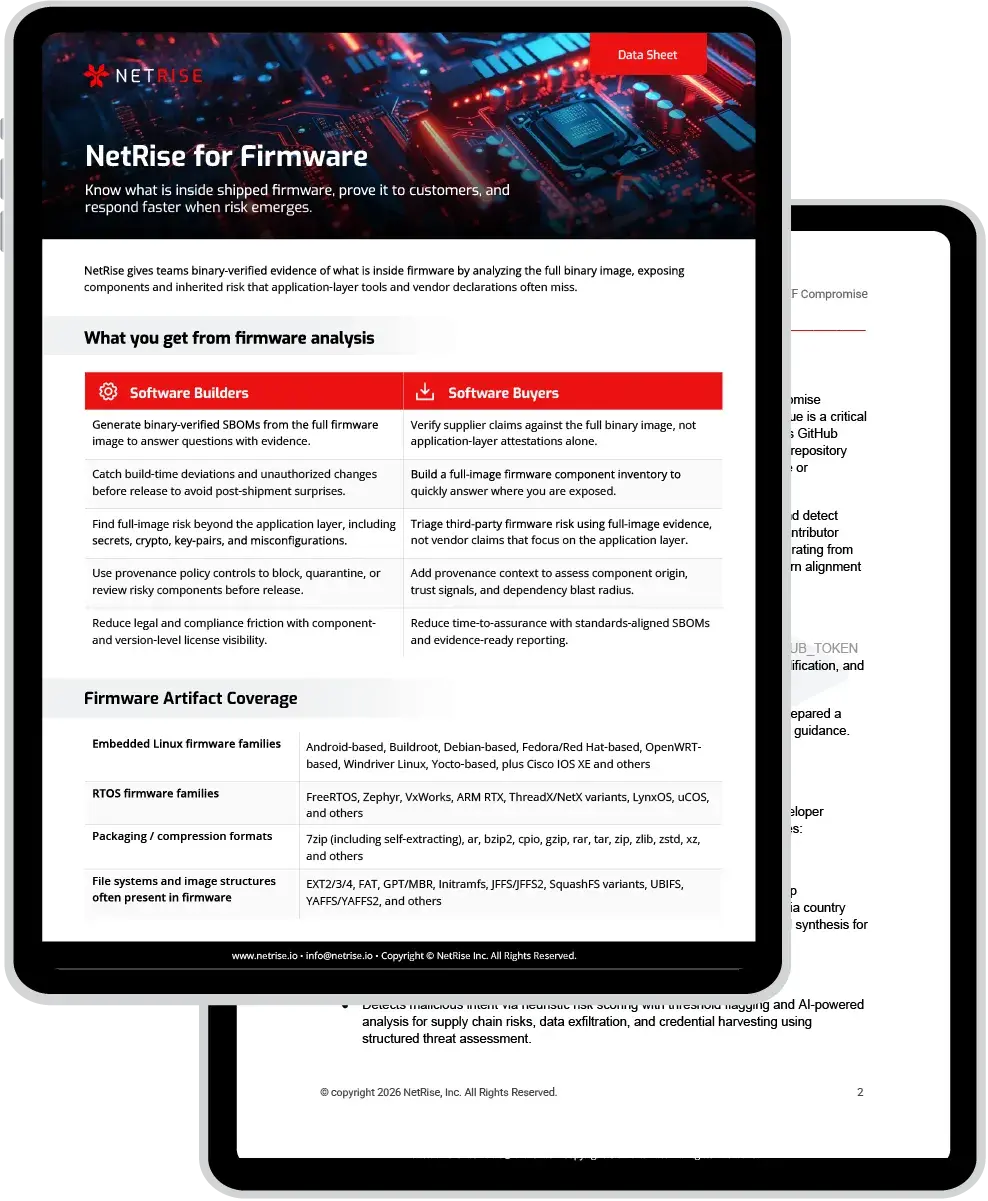
NetRise for Firmware

NetRise gives teams binary-verified evidence of what is inside firmware by analyzing the full binary image, exposing components and inherited risk that application-layer tools and vendor declarations often miss.

Get the full NetRise Firmware Data Sheet to know how we help you see what is inside shipped firmware, prove it to customers, and respond faster when risk emerges.

Download the Data Sheet
NetRise-for-Firmware-Data-Sheet-Detail-Page-Img

Why NetRise is Different:

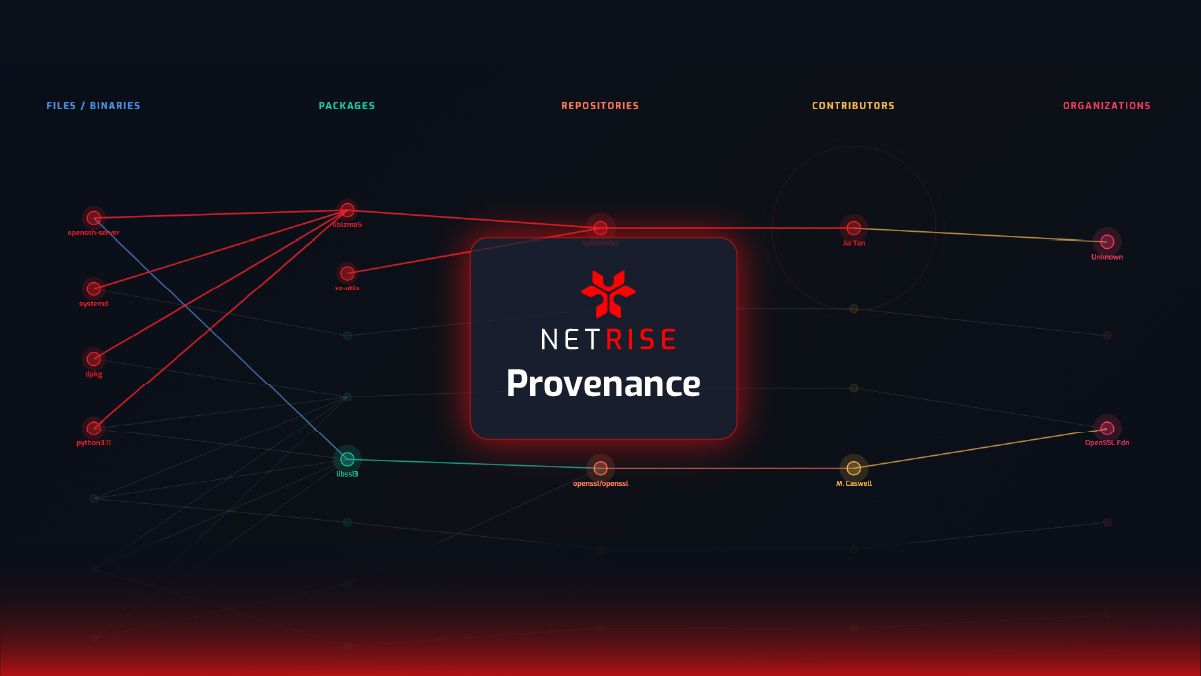
NetRise gives teams an evidence-based view of what is actually inside firmware and other compiled software by identifying all components in the binary image, not just the application layer traditional VM, IR, TPRM, SCA, SBOM, and questionnaire-based approaches evaluate. NetRise Provenance extends that view by adding source, contributor, organizational, and policy intelligence on top of binary-derived inventory.

  • Beyond the application layer

    See all components in the compiled image, not just the portions traditional VM, IR, TPRM, SCA, SBOM, and questionnaire-based approaches typically evaluate

  • Risk beyond CVEs

    Surface secrets, misconfigurations, cryptographic exposures, licensing issues, and other non-CVE risk that impacts real-world exposure.

  • Execution-aware context

    Focus remediation on code and components that are reachable, executable, and relevant to the real attack surface.

  • Software trust intelligence

    Add source, contributor and organizational signals, repository health, and policy context so teams can assess trust and blast radius, not just composition.

Platform Capabilities

  • icon-list

    Software Asset Inventory

    Creates a binary-derived inventory of all components in firmware images, including layers and artifacts application-focused tools do not see.

  • icon-SBOM

    SBOM Management

    Generate, enrich, and validate SBOMs from compiled artifacts for visibility beyond source files, manifests, and application-layer tooling.

  • icon-Reachability

    Reachability

    Prioritize exploitable risk by identifying which vulnerable code is actually reachable via the network and executed.

  • icon-Document

    License Identification

    Detect third-party license obligations in compiled firmware to reduce legal exposure and streamline compliance reviews.

  • icon-credentials

    Secrets Detection

    Expose credentials, keys, and tokens buried in the binary image, beyond what application-layer tools typically uncover.

  • icon-team

    Provenance

    Add source, contributor, organization, blast radius, and policy context to binary-derived inventory for stronger software trust decisions.

icon-ruler

Tailored Solutions for Your Role

  • Software Builders

    • Generate binary-verified SBOMs from the full firmware image to answer questions with evidence.
    • Catch build-time deviations and unauthorized changes before release to avoid post-shipment surprises.
    • Find full-image risk beyond the application layer, including secrets, crypto, key-pairs, and misconfigurations.
    • Use provenance policy controls to block, quarantine, or review risky components before release.
    • Reduce legal and compliance friction with component- and version-level license visibility.
  • Software Buyers

    • Verify supplier claims against the full binary image, not application-layer attestations alone.
    • Build a full-image firmware component inventory to quickly answer where you are exposed.
    • Triage third-party firmware risk using full-image evidence, not vendor claims that focus on the application layer.
    • Add provenance context to assess component origin, trust signals, and dependency blast radius.
    • Reduce time-to-assurance with standards-aligned SBOMs and evidence-ready reporting

Firmware Artifact Coverage

  • icon-puzzle

    Embedded Linux firmware families

    Android-based, Buildroot, Debian-based, Fedora/Red Hat-based, OpenWRT-based, Windriver Linux, Yocto-based, plus Cisco IOS XE and others

  • icon-Security

    RTOS firmware families

    FreeRTOS, Zephyr, VxWorks, ARM RTX, ThreadX/NetX variants, LynxOS, uCOS, and others

  • icon-code

    Packaging / compression formats

    7zip (including self-extracting), ar, bzip2, cpio, gzip, rar, tar, zip, zlib, zstd, xz, and others

  • icon-mapping

    File systems and image structures often present in firmware
    EXT2/3/4, FAT, GPT/MBR, Initramfs, JFFS/JFFS2, SquashFS variants, UBIFS, YAFFS/YAFFS2, and others

Who's Inside Your Software?