
BlogPartners

Solution Brief

NetRise Provenance for Third-Party Risk

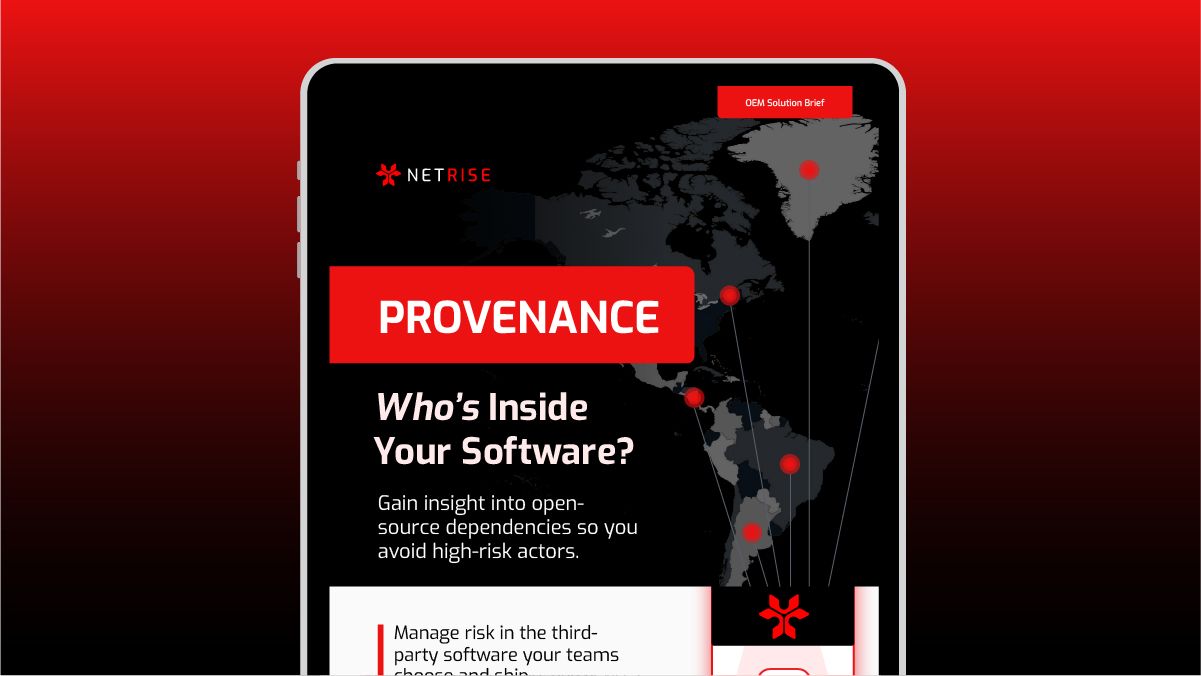
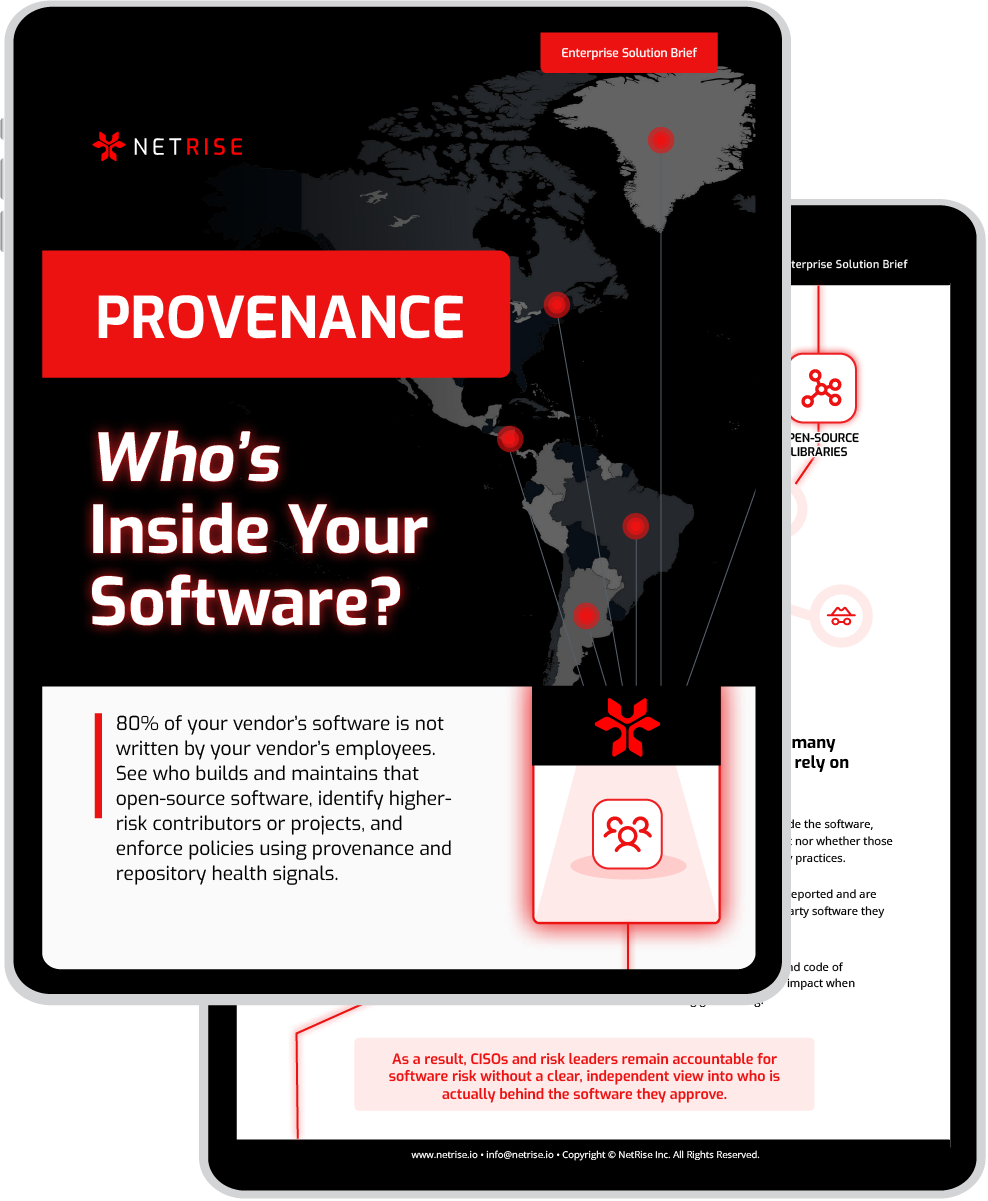
80% of your vendor’s software is not written by your vendor’s employees. See who builds and maintains that open-source software, identify higher-risk contributors or projects, and enforce policies using provenance and repository health signals.

Download the Solution Brief
Netrise-Provenance-Enterprise-Solution-Brief-Detail-Page-Img

The Challenge

Can You Trust Software You Can’t Verify?

Even with Software Bill of Materials (SBOM) requirements, vendor questionnaires, and security reports, critical questions remain unanswered.

question-mark-icon

Do you know who actually writes and maintains the open-source and third-party components inside the software that runs the products you procure?

question-mark-icon

Can you identify risk associated with components maintained by malicious contributors, organizations, or countries, or with weak repository health or security practices?

question-mark-icon

Are you aware that high-risk individuals contribute to software that’s blindly used by vendors, often leading to breaches such as XZ Utils?

These gaps exist because many third-party risk programs rely on incomplete data.

icon-SBOM

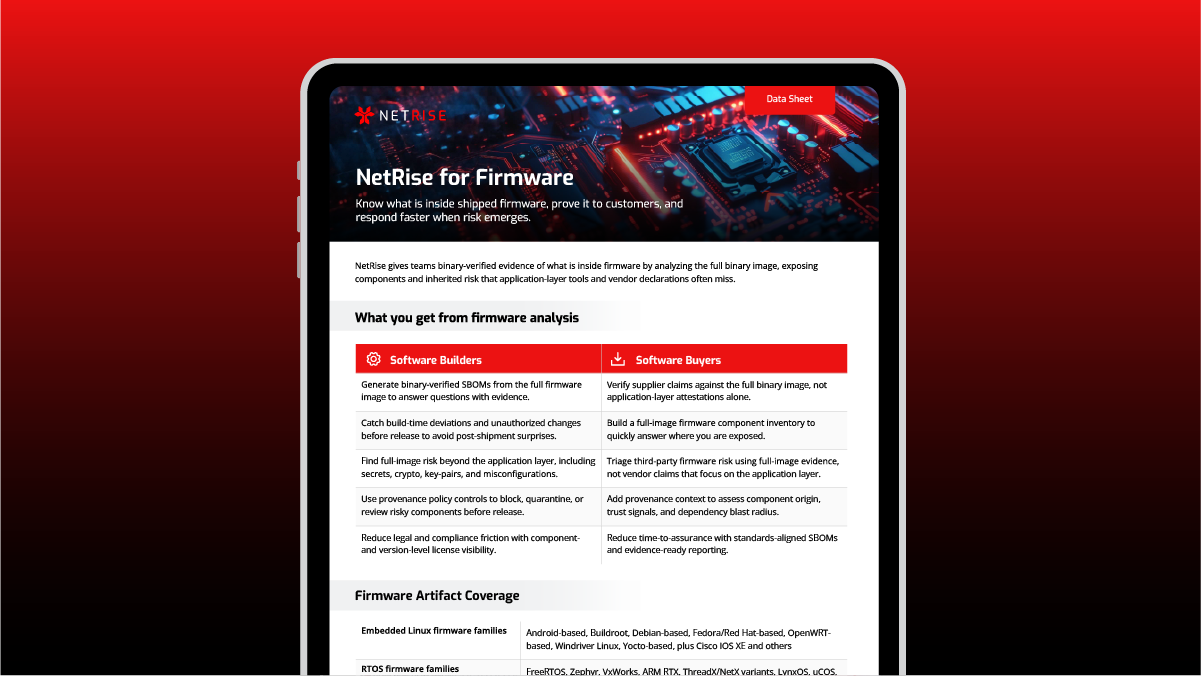
SBOMs describe what is inside the software, but not who contributes to it nor whether those projects follow basic security practices.

icon-alert

Vendor disclosures are self-reported and are unaware of how the third-party software they use is built or secured.

icon-stack

Layers of reused software and code sharing obscure origin increase the impact when something goes wrong.

As a result, CISOs and risk leaders remain accountable for software risk without a clear, independent view into who is actually behind the software they approve.

Why You Need Provenance Intelligence

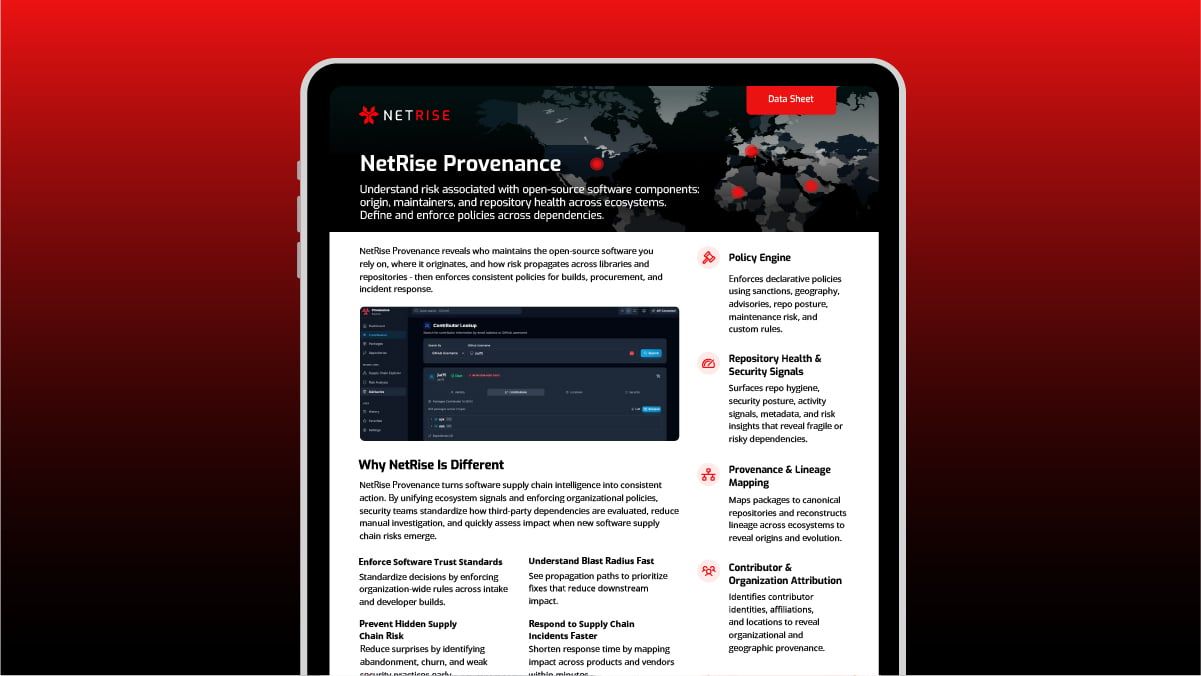
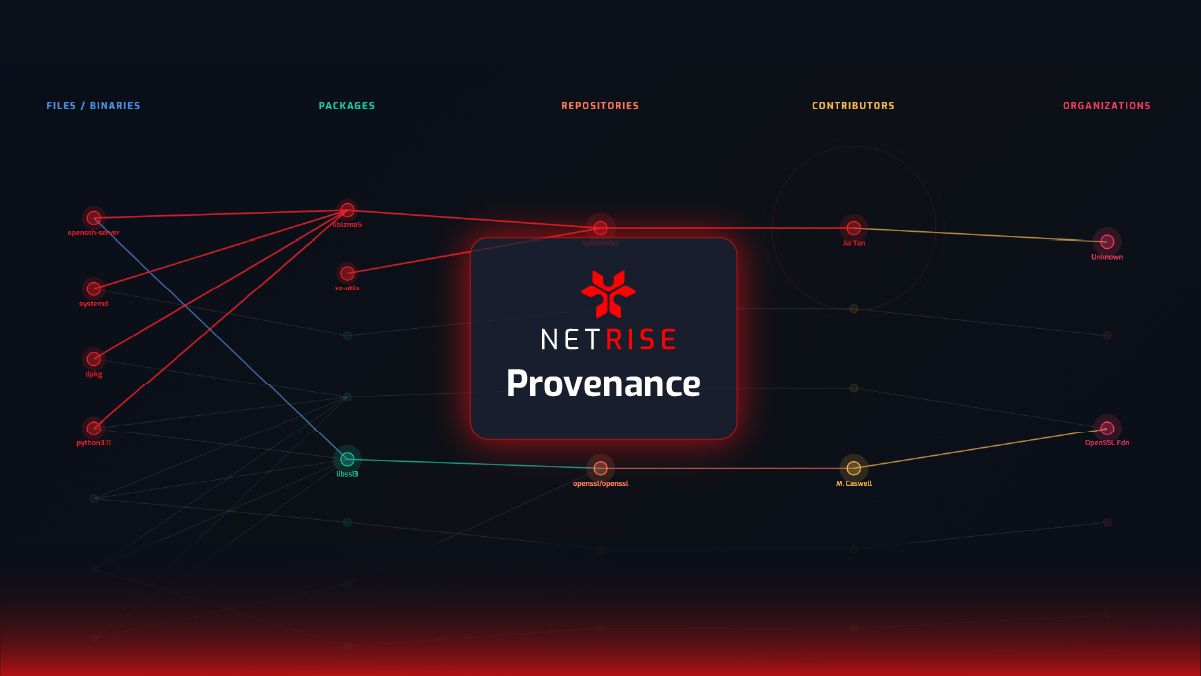
Your vendors increasingly rely on open-source software to deliver their products. They often do not vet that third-party code for risk associated with its contributors. NetRise Provenance links third-party packages and repos to contributors, organizations, and countries, combining advisories, repository health signals, and risk intelligence to highlight risky third-party software. A built-in policy engine turns these signals into enforceable rules for vendor reviews, onboarding, and renewals.

THE SOLUTION

NetRise Provenance: Trust Intelligence for Enterprise Risk Decisions

NetRise Provenance links components to projects, contributors, organizations, and countries, combining advisories, basic indicators of project security practices, and risk intelligence to highlight risky third-party software so third-party risk reviews, onboarding, and renewals rely on verifiable evidence instead of self-reported claims.
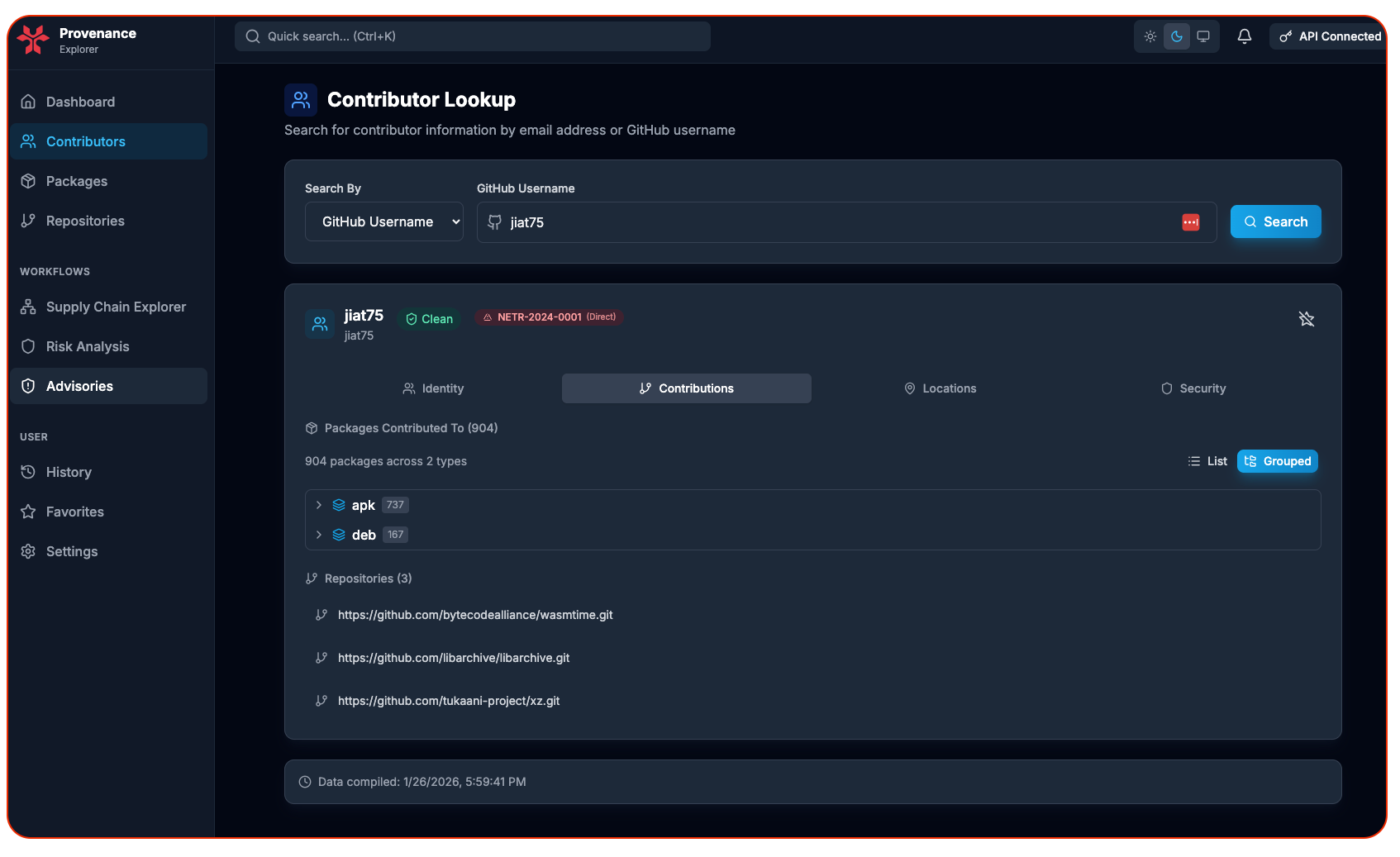
Provenance-Screenshot-Contributor-Lookup

Outcomes for CISOs and Third-Party Risk Teams with NetRise Provenance

  • Verify the real source of software

    Trace components back to their original source projects so you can confirm where the software you buy actually comes from and assess associated risk .

  • Understand who you are trusting

    Open-source software contributors are not your vendors’ employees. See the people and locations where software originates to understand how third-party risk is distributed.

  • Detect high-risk contributors and entities

    Use advisories, geolocation, and threat intelligence to flag components linked to known higher-risk contributors, organizations, or countries before they reach your infrastructure.

  • Make defensible, risk-based decisions

    Use repository health and security signals—such as activity, maintainer concentration, update habits, and signing key changes—to support risk-based evaluations of vendor software.

Product Overview

  • logo-star

    Single Source of Truth

    Give CISOs and risk teams one place to see who builds the software you depend on—and enforce consistent software trust policies across vendors.

  • Source and Relationship Mapping

    Connect software components back to their original projects and see which products from which vendors rely on them, so you can mitigate impact when incidents occur.

  • Maintainer and Organization Attribution

    Link software to real people and organizations, including country-level footprint, to support third-party and geographic risk analysis.

  • Policy-Driven Risk Control

    Highlight and enforce rules against higher-risk maintainers, organizations, or projects using advisories, provenance, and repository health signals.

Why NetRise Provenance Stands Apart

  • icon-Compass

    Independent Source of Truth

    Identify software origin and contributors to open-source software your vendors use.

  • icon-person

    Attribution You Can Act On

    Understand who maintains critical code and where trust is concentrated.

  • icon-alert

    High-Risk Contributor Detection

    Highlight components linked to high-risk maintainers, organizations, or countries using advisories and threat intelligence.

  • icon-list

    Defensible Risk Evidence

    Support audits, regulatory inquiries, and board-level discussions with software-derived proof.

Common Challenges NetRise Provenance Solves

Challenge

Risk associated with open-source software supplied by vendors

How NetRise Provenance Helps

Independently links components to original source projects and verifies contributors so you are not relying on blind trust.

Challenge

Inadequate evidence for third-party risk reviews

How NetRise Provenance Helps

Provides contributor, organization, and country information, combined with threat intelligence, to strengthen due diligence.

Challenge

Unclear blast radius during supply chain incidents

How NetRise Provenance Helps

Shows affected components and products when a risky library, project, or maintainer is identified to prioritize remediation.

Challenge

Difficulty assessing geopolitical risk

How NetRise Provenance Helps

Surfaces contributor, organizational, and country-level signals so teams can identify where geopolitical risk concentrates.

Who’s Inside Your Software?

Trust software with evidence. NetRise Provenance gives CISOs and third-party risk teams the visibility needed to make confident software procurement decisions.