




Most teams know what third-party packages are in their software. Far fewer know who maintains them, where they come from, or how far risk spreads when something goes wrong.
That blind spot matters because software supply chain risk is not only a vulnerability problem. It is also a trust problem.
Compromised maintainers, fragile repositories, and weak stewardship can introduce risk long before a CVE appears, and that risk can spread across products and vendors before teams understand the blast radius.
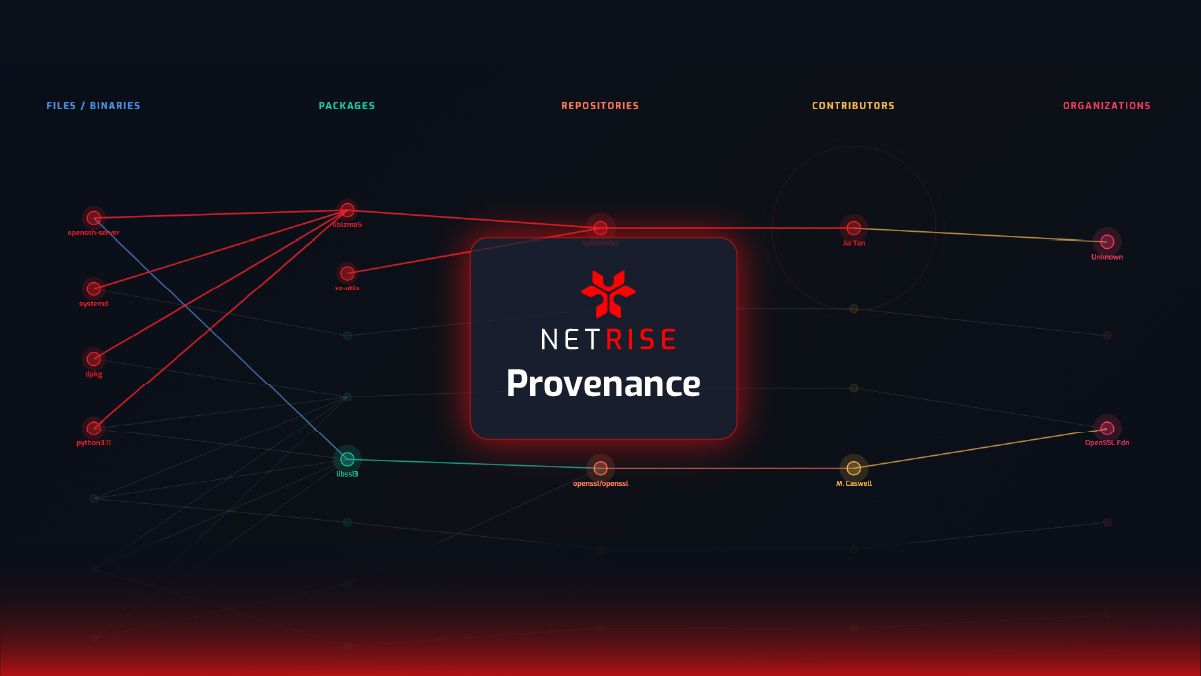
NetRise Provenance reveals who stands behind open-source components through organizational, contributor, and geographic signals, evaluates repository health, and shows how risk propagates. Importantly, it drives action, helping teams enforce consistent decisions across builds, procurement, and incident response through policies tailored to their risk appetite.

Know More Than What’s in Your Software
Traditional tools rely on manifests, vendor disclosures, and vulnerability data to show what packages are declared. NetRise helps teams verify what is actually inside their software, including components and inherited risks that source-based tools miss beyond the application layer.
NetRise Provenance adds the trust context those tools lack: contributor geolocation, software origin, and the relationships that determine how risk spreads.
Verify Where Software Comes From and Who Maintains It
Software risk often hides behind mirrors, forks, transitive dependencies, and unclear stewardship. NetRise Provenance traces packages back to canonical source repositories and links them to maintainers, organizations, and geographic footprint so teams can verify true software origin and understand the stewardship behind the software they depend on.
That context helps teams answer practical questions like:
- Where did this dependency come from?
- Is this the original source, or a fork or mirror?
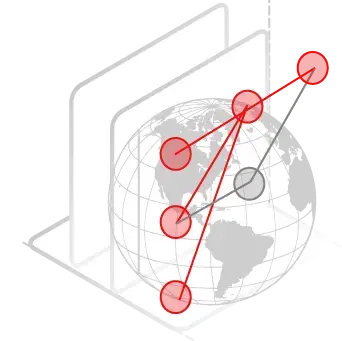
- Where are the contributors located?
- Is stewardship concentrated in a small group?
- Which organizations or regions are involved?
This is especially important for procurement, onboarding, and policy decisions where teams need defensible evidence rather than assumptions.

Evaluate Repository Health Early
A dependency does not need an active CVE to become risky. Declining activity, maintainer concentration, weak hygiene, or sudden changes in stewardship can all signal growing risk. NetRise Provenance surfaces repository health and trust indicators so teams can identify fragile dependencies earlier, before they become incidents.

Understand Blast Radius Across Your Software
When a package, repository, or maintainer becomes risky, the first question is rarely what it is. It is where else that risk exists.
NetRise Provenance maps dependency and reverse-dependency relationships so teams can see how risk propagates across libraries, repositories, products, services, and vendors.
That helps teams scope incidents faster, understand downstream impact, identify exposed suppliers, and prioritize action based on real blast radius.

Enforce Software Trust Standards with Policy Engine
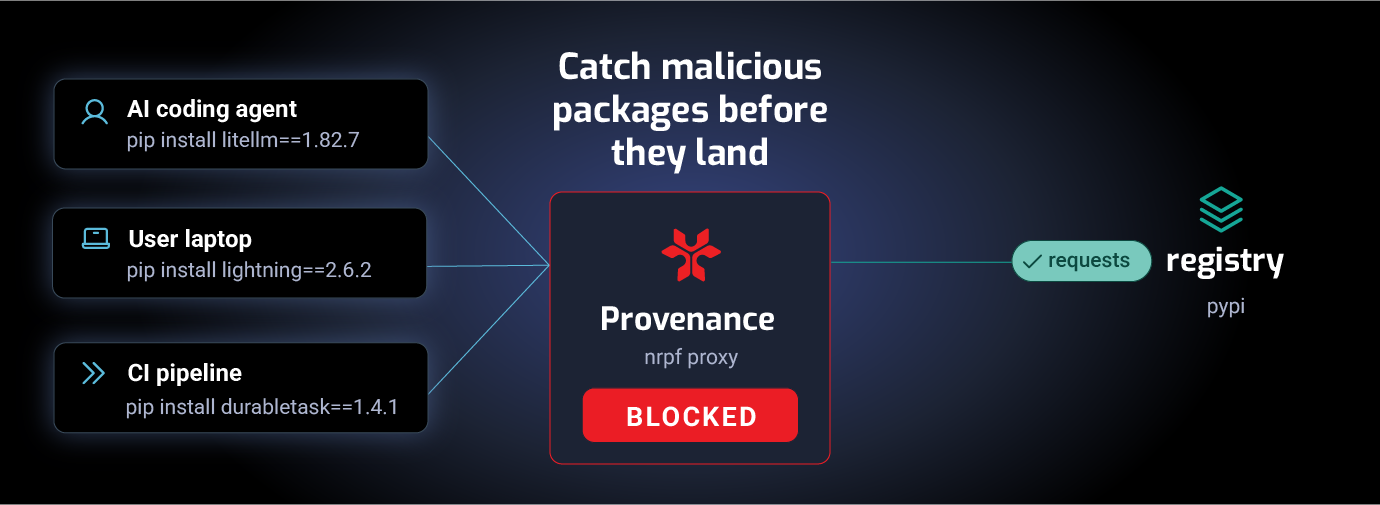
NetRise Provenance includes a Command Line Interface (CLI)-based Policy Engine that enables teams to define and enforce declarative software trust rules using provenance, advisories, repository health, geography, and organizational risk signals.
Using Policy Engine, teams can:
- block risky dependencies during builds
- enforce standards at intake and procurement
- apply consistent decisions during incidents
- fail CI/CD builds when policy is violated

That gives teams a more consistent way to block, flag, quarantine, or review higher-risk dependencies.
Built for Builders and Buyers of Software
With NetRise Provenance, Product Security and DevSecOps teams can evaluate open-source components before they enter builds using maintainer identity, repository health, and policy enforcement.
NetRise Provenance for Developers and Product Security
CISOs and third-party risk teams can use NetRise Provenance to assess vendor software with independent evidence about contributors, organizations, geographic exposure, and repository health.
NetRise Provenance for Third-Party Risk
In both cases, the goal is the same:
Replace blind trust with independent evidence.
Coverage Across Modern Ecosystems
Software risk doesn’t live in one ecosystem.
NetRise Provenance provides intelligence across ecosystems—including registries like PyPI—through a standards-based API.
Teams can apply the same trust decisions across the software they build, buy, and inherit.
Why This Matters Now
Teams need to know:
- where the maintainers are located
- where software originates
- how risk spreads
- when repository signals indicate fragility
- how to enforce trust policies before risk spreads
NetRise Provenance was built to answer those questions.
Trust Software with Evidence
You cannot secure what you cannot verify.
NetRise Provenance shows who stands behind your software through organizational, contributor, and geographic signals, how far their risk reaches, and where teams need to act before it spreads.
It gives organizations an independent source of truth, attribution they can use, and policy-backed decisions they can defend.
Learn more about NetRise Provenance