






Software Supply Chain Security
How Do You Secure Software Your Team Didn’t Write?
Most software you build or buy contains code your organization didn’t write. Securing it starts with independent evidence of what’s actually inside, whether it’s trustworthy, and how far risk reaches.
The Challenge
Software Enters Your Organization In Two Ways
Every package, dependency, and AI-generated install becomes part of what you ship.
Every vendor, OEM, firmware image, appliance, and commercial application introduces inherited software.
- Block risky software before it reaches production.
- Replace manual dependency reviews with enforceable software trust policy.
- Scope and remediate software supply chain incidents in minutes instead of days.
NetRise Provides Software Risk Analysis You Can Measure
- Analyze 4× more software artifacts per analyst.
- Reduce vulnerability noise by more than 90% with reachability analysis.
- Cross-correlate newly disclosed threats across your software portfolio in seconds.
- Should we trust this package?
- Who maintains it?
- Does it meet policy?
- If it’s compromised tomorrow, where does it spread?
Common Questions
- What’s actually inside?
- Can we verify the vendor’s claims?
- Is the vulnerable component really present?
- Which deployed assets are affected?
SCA Scanners
Miss components outside package manifests.
Source-Derived SBOMs
Don’t always agree with what actually shipped.
Manual Dependency Reviews
Don’t scale across thousands of packages or AI-assisted development.
Blind Spots
Each approach provides part of the picture but doesn’t produce evidence. Without independent evidence, organizations can’t confidently determine what they shipped, what they inherited, or how new threats affect them.
Vendor Attestations
Rarely cover anything beyond the application layer.
Questionnaires
Rarely capture anything more than a snapshot in time.
Manual Binary Analysis
Can’t deliver fast identification of exposure when incidents occur.
- Open source governance
- Dependency management
- Package policy enforcement
- Secure software development
- CI/CD security
Common Workflows
- Vendor software validation
- Third-party risk assessment
- Binary analysis
- Software inventory
- Incident response
Every package, dependency, and AI-generated install becomes part of what you ship.
NetRise Provides Software Risk Analysis You Can Measure
- Block risky software before it reaches production.
- Replace manual dependency reviews with enforceable software trust policy.
- Scope and remediate software supply chain incidents in minutes instead of days.
Common Questions
- Should we trust this package?
- Who maintains it?
- Does it meet policy?
- If it’s compromised tomorrow, where does it spread?
Blind Spots
SCA Scanners
Miss components outside package manifests.
Source-Derived SBOMs
Don’t always agree with what actually shipped.
Manual Dependency Reviews
Don’t scale across thousands of packages or AI-assisted development.
Common Workflows
- Open source governance
- Dependency management
- Package policy enforcement
- Secure software development
- CI/CD security
Every vendor, OEM, firmware image, appliance, and commercial application introduces inherited software.
NetRise Provides Software Risk Analysis You Can Measure
- Analyze 4× more software artifacts per analyst.
- Reduce vulnerability noise by more than 90% with reachability analysis.
- Cross-correlate newly disclosed threats across your software portfolio in seconds.
Common Questions
- What’s actually inside?
- Can we verify the vendor’s claims?
- Is the vulnerable component really present?
- Which deployed assets are affected?
Blind Spots
Vendor Attestations
Rarely cover anything beyond the application layer.
Questionnaires
Rarely capture anything more than a snapshot in time.
Manual Binary Analysis
Can’t deliver fast identification of exposure when incidents occur.
Common Workflows
- Vendor software validation
- Third-party risk assessment
- Binary analysis
- Software inventory
- Incident response
Each approach provides part of the picture but doesn’t produce evidence. Without independent evidence, organizations can’t confidently determine what they shipped, what they inherited, or how new threats affect them.
Different Workflows. One Requirement.
Every software trust decision comes down to the same requirement: independent evidence of what’s actually in the software, who stands behind it, and how far risk reaches.
Get a DemoThe Solution
Two Products. One Complete Answer
NetRise replaces assumptions with independent software evidence across the entire software supply chain. Together, NetRise Provenance® and NetRise Turbine® help organizations prevent risky software from entering their environment, verify what actually shipped, and respond quickly when new threats emerge.
NetRise Provenance
Prevent Software Risk Before It Spreads
Understand whether software should be trusted before it enters your environment.
Scope incidents in minutes instead of days with blast radius analysis.
Keep malicious packages out of your builds.
Apply one consistent trust standard to every dependency.
Catch risky dependencies CVE scans miss.
NetRise Turbine
Verify What Actually Shipped
Independently verify the software you build and receive using evidence from the final release artifact.
Know what’s actually inside your software — no source code required.
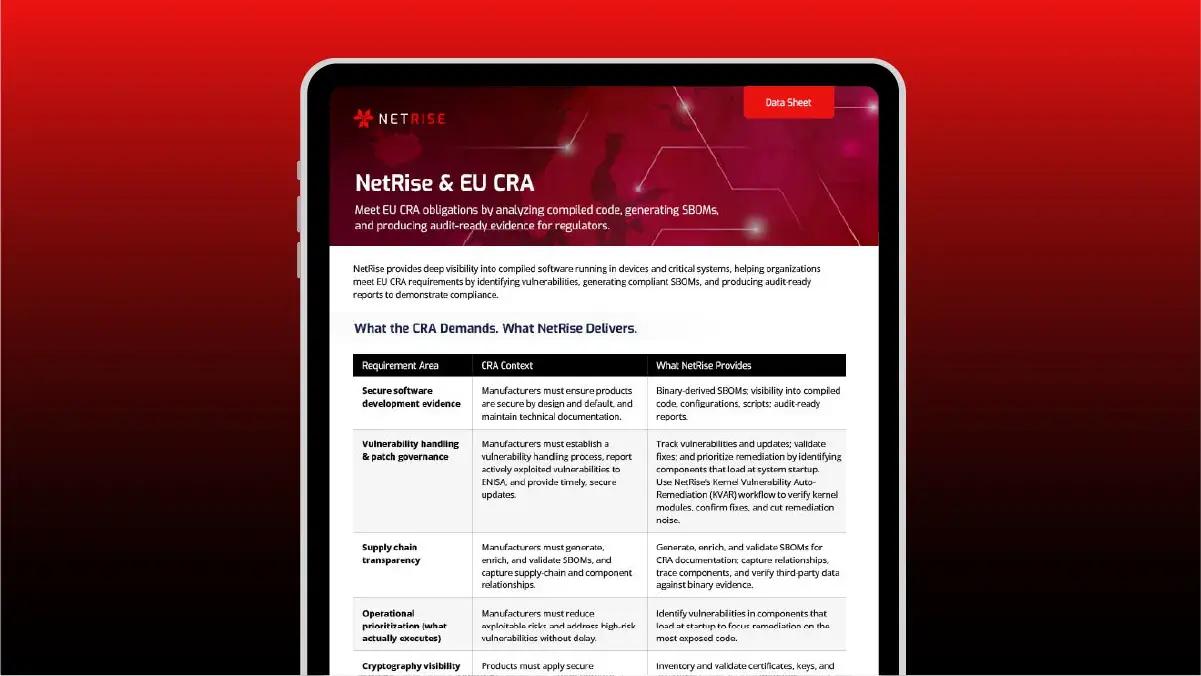
Produce build-true SBOMs and inventories you can hand to customers and regulators.
Fix reachable, exploitable risk first — and surface the non-CVE risk scanners miss.
Verify vendor claims with independent binary evidence.
Together They Deliver Software Supply Chain Security
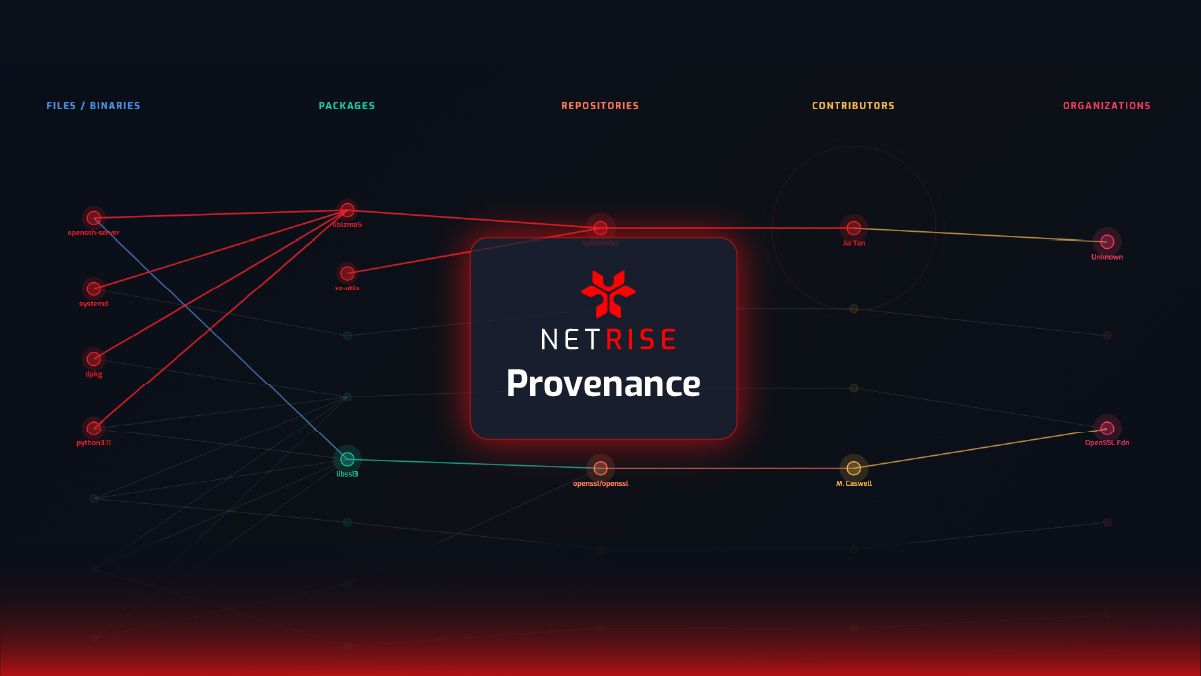
Provenance determines whether software should be trusted and traces how risk propagates across packages, repositories, products, and suppliers.
Turbine independently verifies where those components actually exist inside the software you build and receive.
Answer, in minutes:
- Are we affected?
- Which products contain it?
- Which vendors shipped it?
- What should we remediate first?
Ready to Eliminate Blind Trust in Your Software?
Frequently Asked Questions
What is software supply chain security?
Software supply chain security is the practice of securing the code an organization builds or buys but didn’t write. NetRise approaches it with independent evidence of what’s actually inside software, whether it can be trusted, and how far risk reaches.
How does NetRise secure software you didn’t write?
NetRise replaces assumptions with independent software evidence. NetRise Provenance determines whether software should be trusted and traces how risk propagates; NetRise Turbine verifies what actually shipped from the final release artifact.
What’s the difference between NetRise Provenance and NetRise Turbine?
NetRise Provenance analyzes open-source dependency risk — origin, maintainers, repository health, and how far risk propagates. NetRise Turbine analyzes the compiled artifact to verify what’s actually inside the software you build and receive. They’re complementary products.