






INCIDENT RESPONSE
Incident Response: Know Your Exposure in Hours, Not Months
When the next Log4j hits, the question isn't whether you'll respond. It's how long it takes to answer two things: are we exposed, and where?
When a vulnerability is disclosed, learn how far it reaches across your software supply chain and determine which assets actually contain it and whether it's reachable — so you scope exposure in hours, not weeks.
The Challenge
When the Next Incident Hits, How Long Until You Know Where You're Exposed?
Incident response runs on speed. Mean time to exploit vulnerabilities is now estimated at roughly negative seven days — exploits run before a patch exists. Yet when zero-days bugs hit, most teams spend weeks hunting them across firmware and appliances. NetRise already knows what's inside — so you only search once.
Where Incident Scoping Stalls
Asset inventories & CMDB
CVE mismatch between a device's declared product and the components actually inside each build.
Vendor advisories & questionnaires
Depend on each vendor to disclose whether a product is affected — on their timeline, not yours.
Scanners & source SBOMs
Report declared packages; the affected component can be statically linked or embedded in the build, where they won't find it.
Manual triage
Tracing one component across every product and asset by hand is what turns scoping into a months-long project.
With NetRise
Evidence Across the Incident Lifecycle
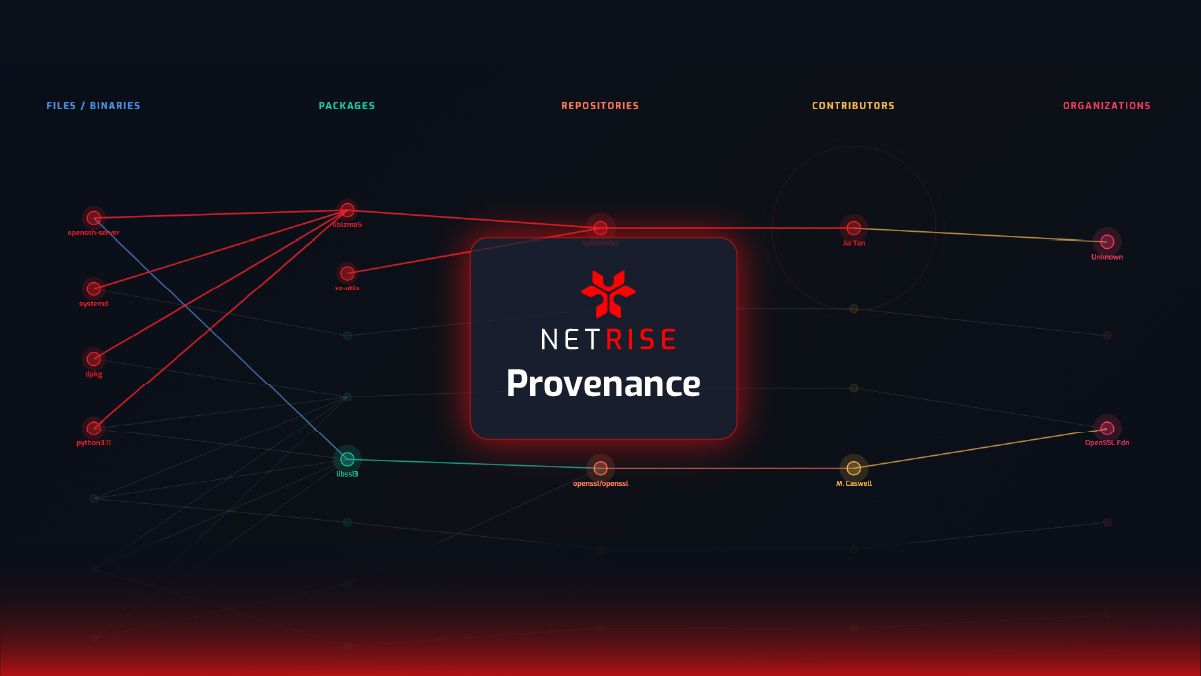
"Could this reach us?" NetRise Provenance® maps how far a disclosed vulnerability spreads across the open-source ecosystem — the libraries and dependencies that carry it — so you know its potential reach the moment it's disclosed.
"Do we actually have it, and where?" NetRise Turbine® confirms which assets contain the component and correlates the findings across your environment; reachability tells you which instances represent exploitable exposure.
Not every instance is equally urgent. Filter to what's on the Known Exploited Vulnerabilities (KEV) list and what's actually reachable via the network.
For each affected asset, see the vulnerable component version present and, when available, the version that fixes it, so your response is concrete. While you wait on the vendor's patch, mitigate with security controls and policies you own — then apply the fix once it ships.
The Solution
Two Products. One Complete Answer.
Provenance answers how far the risk reaches across open-source — the libraries and dependencies that carry the affected component. Turbine then confirms which of your products and assets actually contain it, and whether it's reachable. Together they turn "are we exposed, and where?" into an answer that guides your response in hours.
NetRise Provenance
One affected component is rarely the whole story. Provenance maps how far the affected package reaches, so scoping doesn't stop at the first hit:
- How far does it reach? — The other products, libraries, and vendors that call the affected package.
- Is the project still sound? — Whether the repository behind the component is maintained or decaying.
- Can you trust the source? — The maintainers and organizations behind it, and whether they're tied to known risk.
What Provenance maps across the supply chain:
- 3M+open-source repositories tracked
- 10M+packages mapped to upstream sources
- 100M+components marked, with organization and geographic data
NetRise Turbine
When Log4j hits, search once. Turbine confirms which of your analyzed assets contain the affected component — not which vendors have gotten around to telling you:
- Are we exposed? — Search by CVE, or by component and version, across every analyzed asset.
- Which version, and the fix? — Get back the assets that contain it, the version present, and the version that resolves it.
- Is it an urgent exposure? — Focus the response on the assets where the component is actually reachable, so your team works genuine exposure first instead of chasing every instance.
What Turbine answers in the incident
- 4000reachable vulnerabilities surfaced by deep execution-graph analysis
- 98%noise cut by execution-aware reachability in published analyses
- 90daysof manual scoping saved by a single query across every analyzed asset
Incident Response Results You Can Measure
answer "are we exposed?" for any CVE or component across every analyzed asset, instead of polling vendors or tracing by hand.
prioritize a single device's findings to what's known-exploited and reachable in one toggle.
execution-aware reachability narrows raw component matches to instances that are actually exposed.
Months to minutes — scope where you're exposed by correlating the component across assets and mapping how far it reaches.
Ready for the Next Log4j?
FAQ
How does NetRise help with incident response?
NetRise lets incident responders answer two questions fast: are we exposed, and where? Search any CVE or component and NetRise Turbine confirms which analyzed assets contain it and whether it's reachable; NetRise Provenance maps how far the affected component reaches across your supply chain.
How does NetRise help scope exposure to a vulnerability like Log4j?
When a component is disclosed, you search it once instead of polling vendors or tracing it by hand. NetRise returns the assets that contain the affected version, filters to reachable and KEV-listed instances, and correlates it across your environment — turning a weeks-long scoping effort into a search.
Can NetRise tell me which assets are affected by a specific CVE?
Yes. Search by CVE or by component and version, and NetRise returns the analyzed assets that contain it, the version present, and the version that fixes it — evidence drawn from the compiled software itself, not vendor self-attestation.
Does NetRise show how far an affected component reaches across my supply chain?
Yes. NetRise Provenance maps how far a risky component or package spreads — the other products, libraries, and vendors it flows into — so scoping an incident doesn't stop at the first affected asset.
Does NetRise replace my IR or SIEM tools?
No. Your IR platform and SIEM stay central to detection and response workflow. NetRise answers one question they can't: given a disclosed component, which of your software assets actually contain it, and how far does it reach.